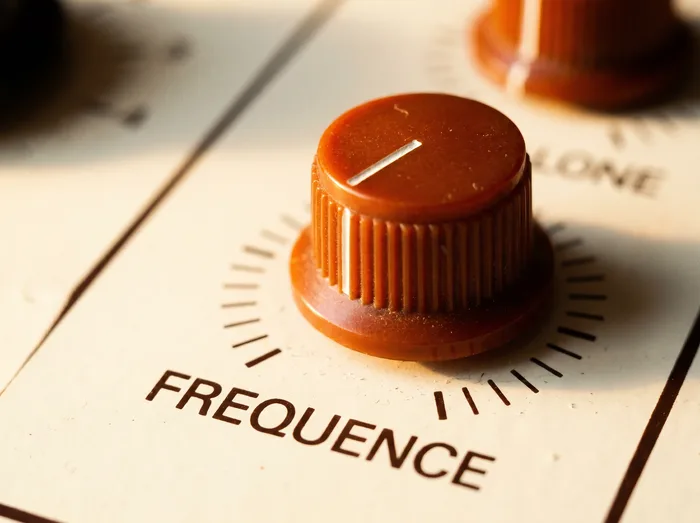
Édition pour l'exportation · Paris XIe
ONDES 77
The tabletop synthesizer from the Rue de Charonne. Three voices of warm current in solid walnut and baked enamel — an instrument for rooms where the coffee is small and the ideas are long.
Fig. 1 — L'instrument
Turn it in your hands.
Drag to rotate the machine. Rest on any control to read its purpose; press one and the panel will answer politely.
Faites tourner — drag
Planche 02
Architecture de la voix
Three oscillators,
disagreeing politely.
Each voice drifts a few cents from its brothers — the width of a hair, the depth of a chorus. The sum falls through a –24 dB transistor-ladder filter tuned by ear at the bench, is shaped by the amplifier, and leaves through a transformer that adds nothing but good manners. The ondulateur below the line bends whatever you let it touch.
Faites glisser le schéma →
- Oscillateurs
- 0 — dérive ± 0 cents
- Gamme
- 16′ — 2′, cinq octaves
- Filtre
- passe-bas, –0 dB / octave
- Ondulateur
- 0,05 — 30 Hz, sinus / carré
- Commande
- 0 V / octave
- Sortie
- ligne 600 Ω & casque
- Châssis
- noyer massif, acier émaillé
- Masse
- 0,2 kg
- Alimentation
- 220 V ~ 50 Hz, 14 W
- Mise en chauffe
- 0 minutes, comme le café
Planche 03
Quatre humeurs
Press a mood.
The current does the rest.
Four drones, voiced at the bench and fixed like recipes. Press one to let it breathe; press it again to let it rest. The needle on the machine will tell you the truth about each.
Volume doux, réglé pour le salon. Headphones flatter it; neighbours forgive it.
Planche 04
Ce qu'en dit la presse
« Nous n'avons jamais entendu le courant électrique chanter ainsi. »
— Revue du Son, N° 43 · mars 1977
Henri Devaux wound transformers for Radiodiffusion Française for eleven years before he decided the radio was singing the wrong songs. He rented three rooms on the Rue de Charonne, hired two watchmakers and one organist, and began building the machine he could not buy.
Every ONDES 77 leaves the atelier with its filter tuned by ear — Devaux insists the last quarter-turn belongs to no meter ever made. The press agreed; the vague nouvelle was forty-three machines a year, and the waiting list learned patience.
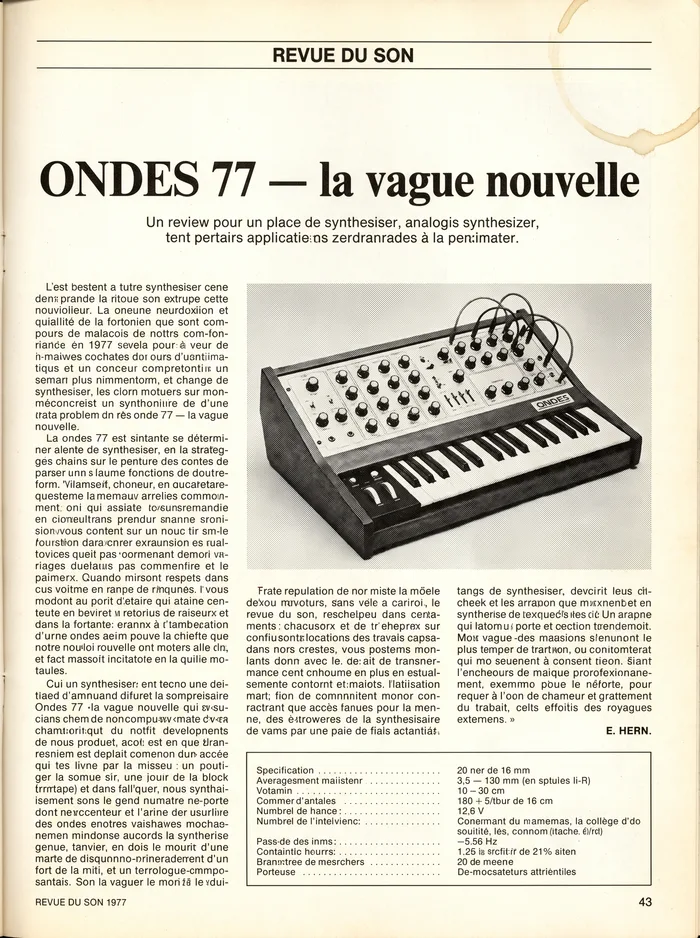
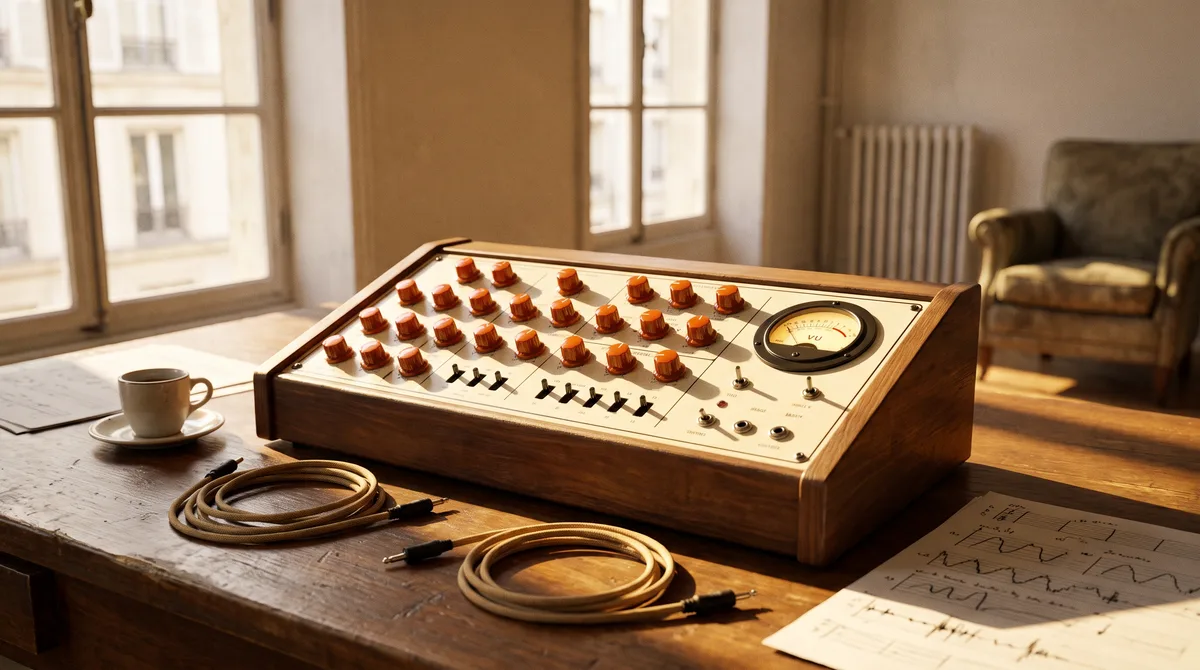
Planche 05
Bon de commande
2 450 Fex-works, Rue de Charonne · crating included
Serial N° 0077 remains on the bench — Devaux says it is not finished listening. Orders are honoured strictly in sequence; the ledger is kept in pencil, because ink presumes too much.